
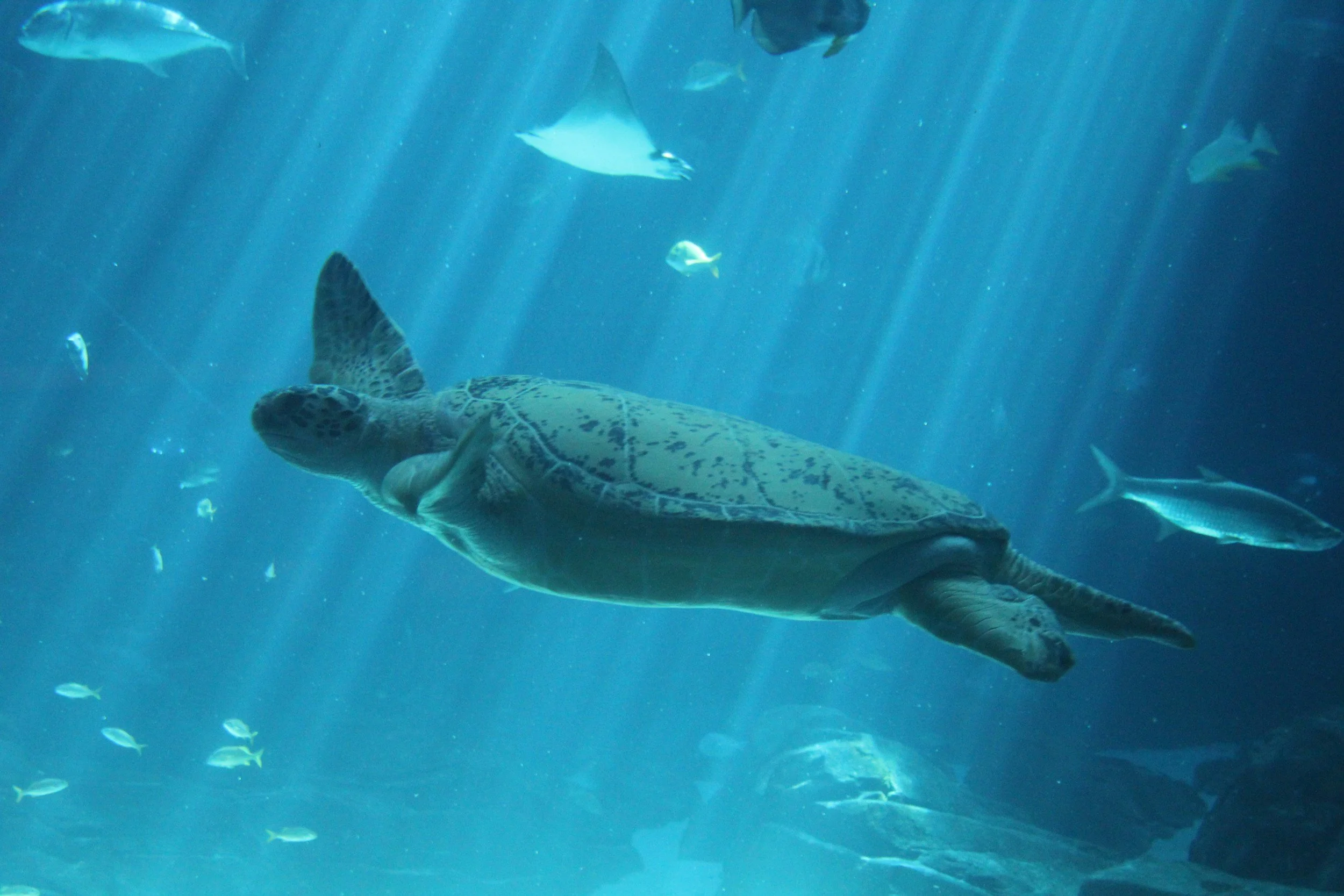
The Sea Turtle Life Cycle
Press each stage to expand for more information
- Location: Female sea turtles come ashore to sandy beaches to lay their eggs.
- Clutch Size: About 50 to 200 eggs per nest depending on species.
- Incubation: Eggs incubate for about 45–70 days.
- Temperature-Dependent Sex: Warmer sand produces more females, cooler sand more males.
- Hatching: Tiny turtles emerge from the sand, usually at night.
- Dash to the Ocean: They instinctively head toward the brightest horizon.
- High Mortality: Many hatchlings are eaten by predators like crabs, birds, and fish.
- Duration: This mysterious period lasts several years.
- Habitat: Juveniles drift with ocean currents in floating seaweed or open ocean habitats.
- Growth: They feed on plankton, jellyfish, and small animals, growing slowly.
- Habitat Shift: As they grow, they migrate to coastal foraging areas.
- Feeding: Diet becomes more specialized depending on species.
- Predators: Fewer predators now, but still vulnerable to sharks and human threats.
- Maturity: Reached between 10 to 50 years depending on species.
- Migration: Adults migrate long distances between feeding grounds and nesting beaches.
- Reproduction: Mating occurs in the ocean; females return to shore to nest every 2–4 years.
- Lifespan: Can live 50+ years, possibly over 100 in some cases.
- Nesting: Females dig a hole with their flippers and lay eggs, repeating the cycle.
- Nesting Frequency: One female can nest several times up to 7+ in a single season.